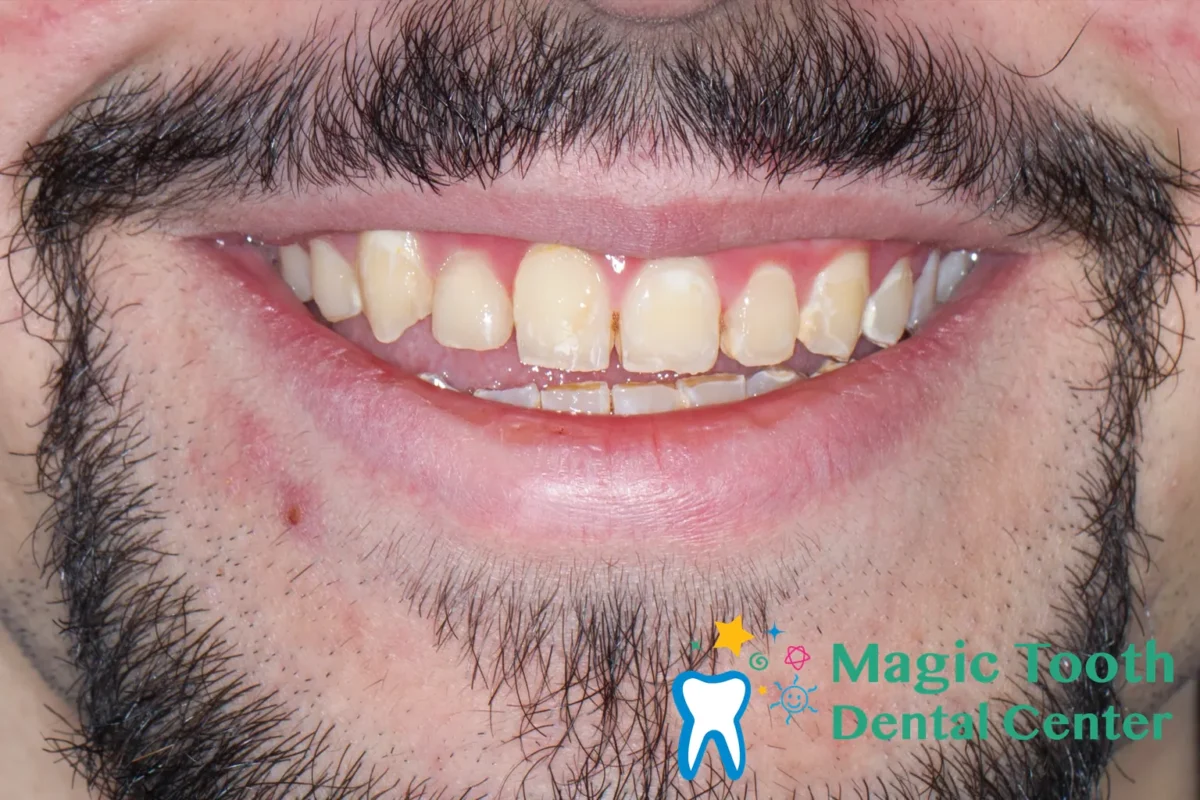
 Before
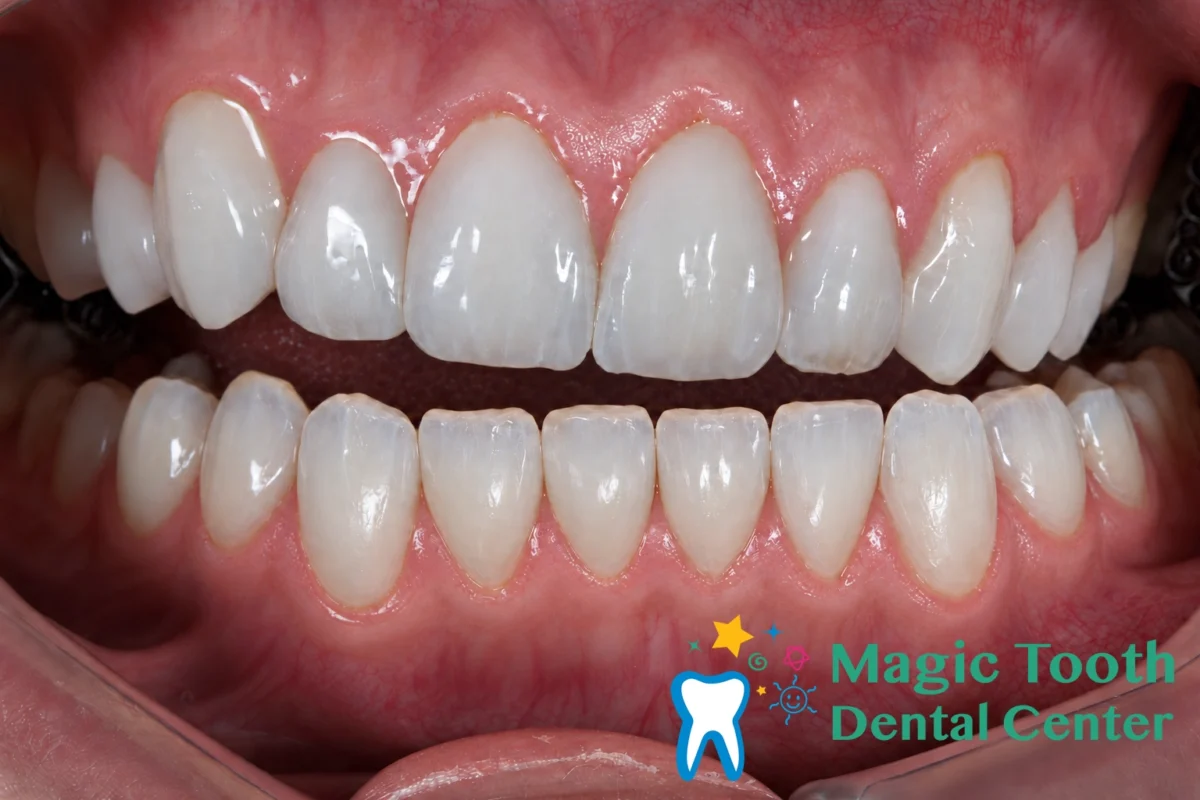
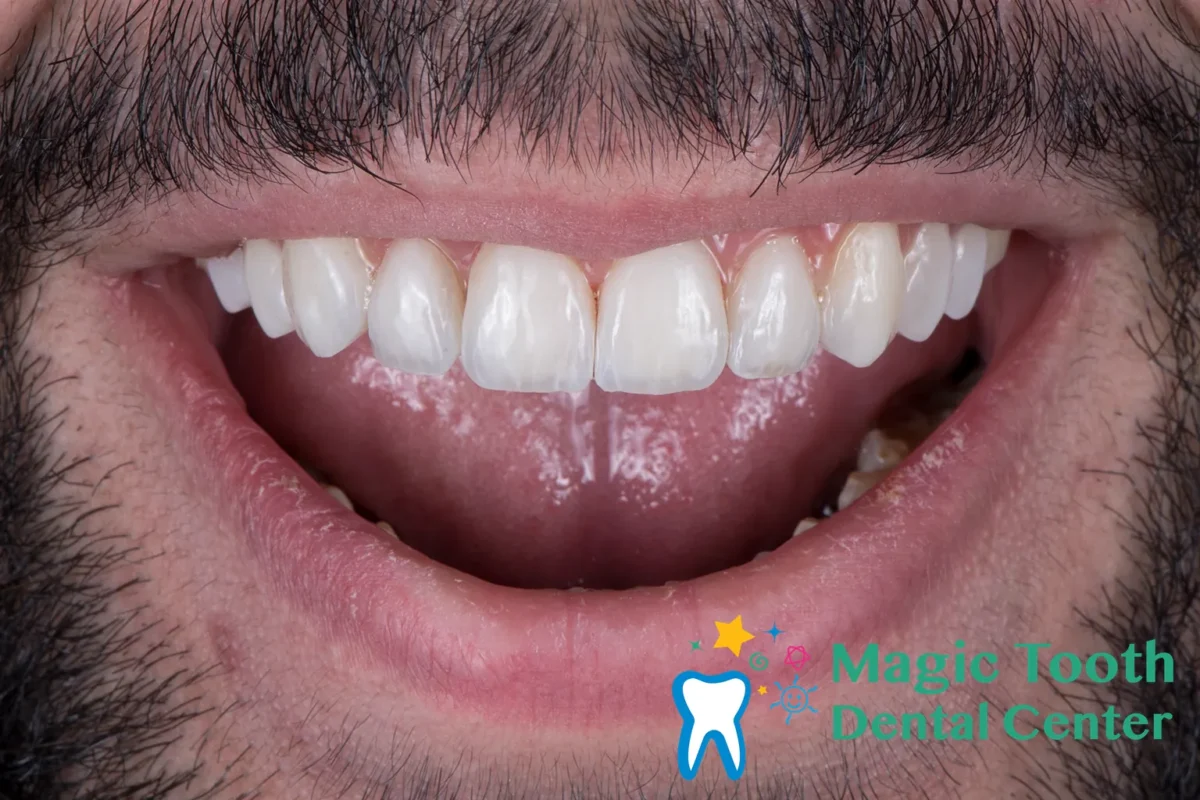 After
Before & after · Ceramic veneers
Lifelike translucency and natural color
Our ceramic crowns and veneers in action: stained, worn and chipped front teeth, restored with thin ceramic veneers. Ceramic lets light pass through it much like natural enamel, so the new teeth show depth, translucent edges and a shade that suits the face.
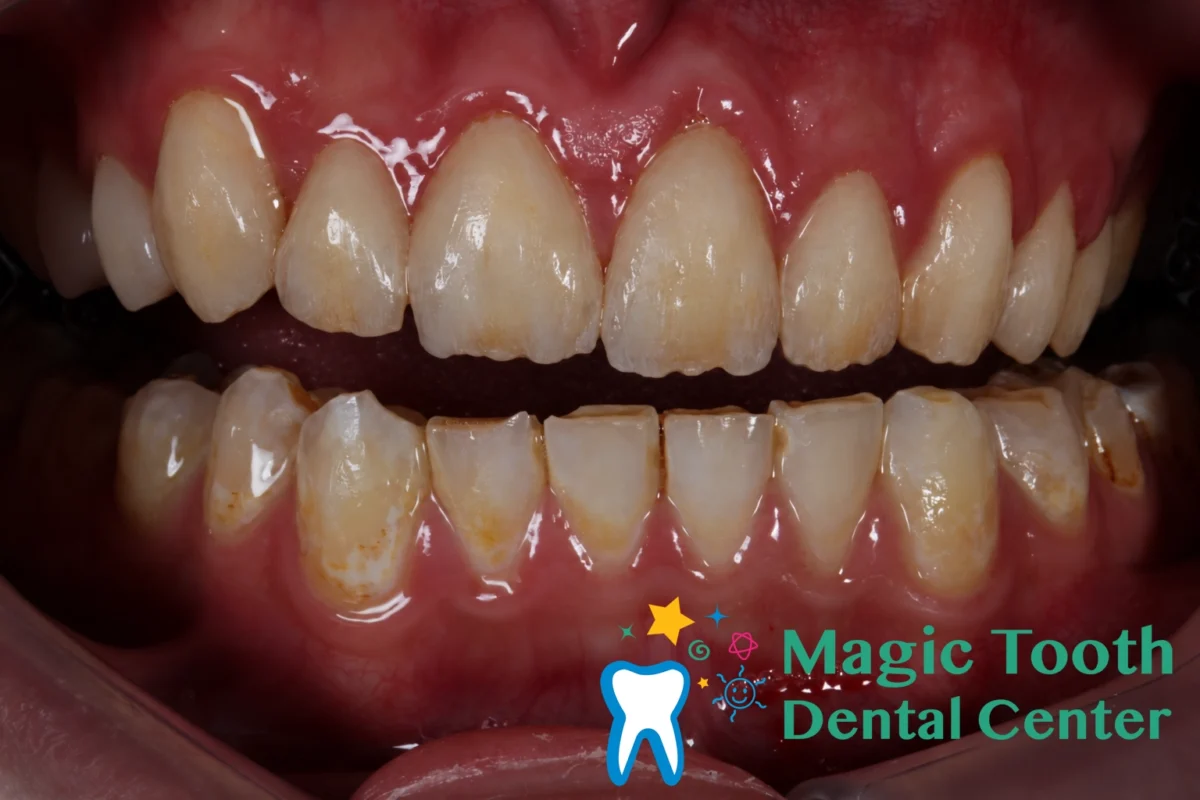 Before
 After
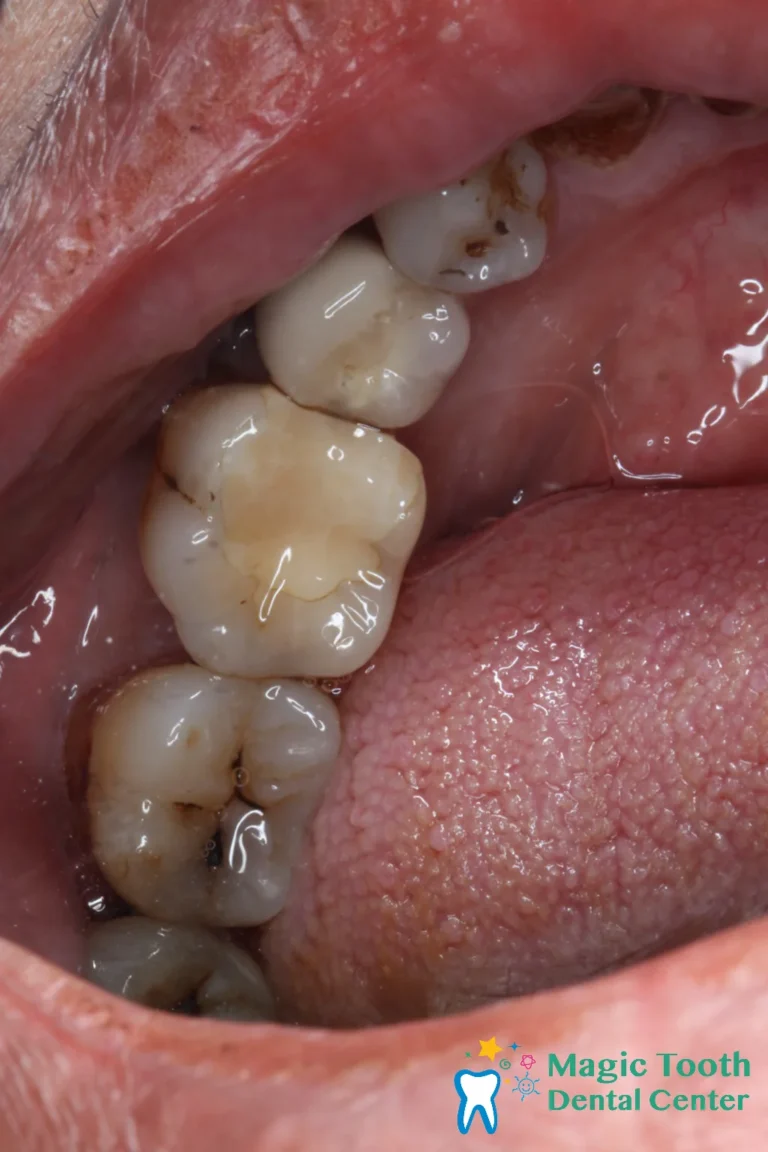
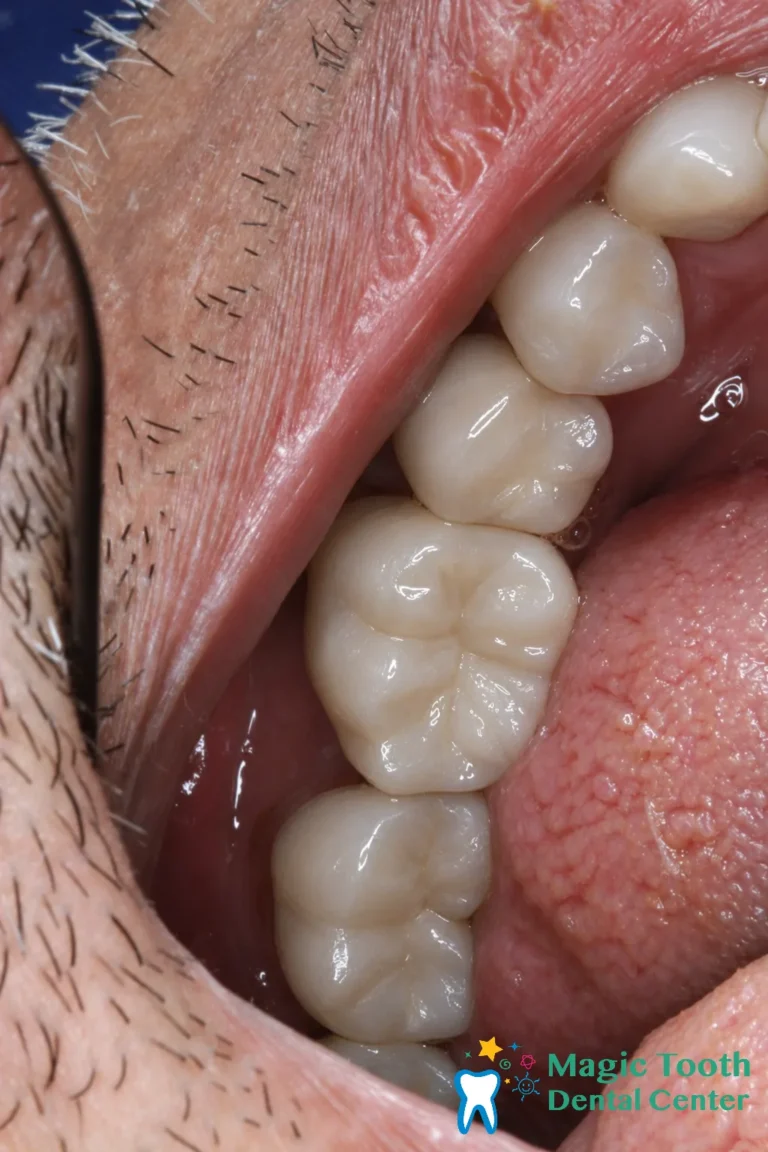
Before & after · All-ceramic crown
Natural color and shade, even on a back tooth
A molar with a large, discolored old filling and dark stained edges, restored with a metal-free all-ceramic crown. With no metal inside to block the light, the ceramic lets light through much like natural enamel and blends with the color and shade of the neighboring teeth, so even a back tooth looks like your own.
 Before
 After
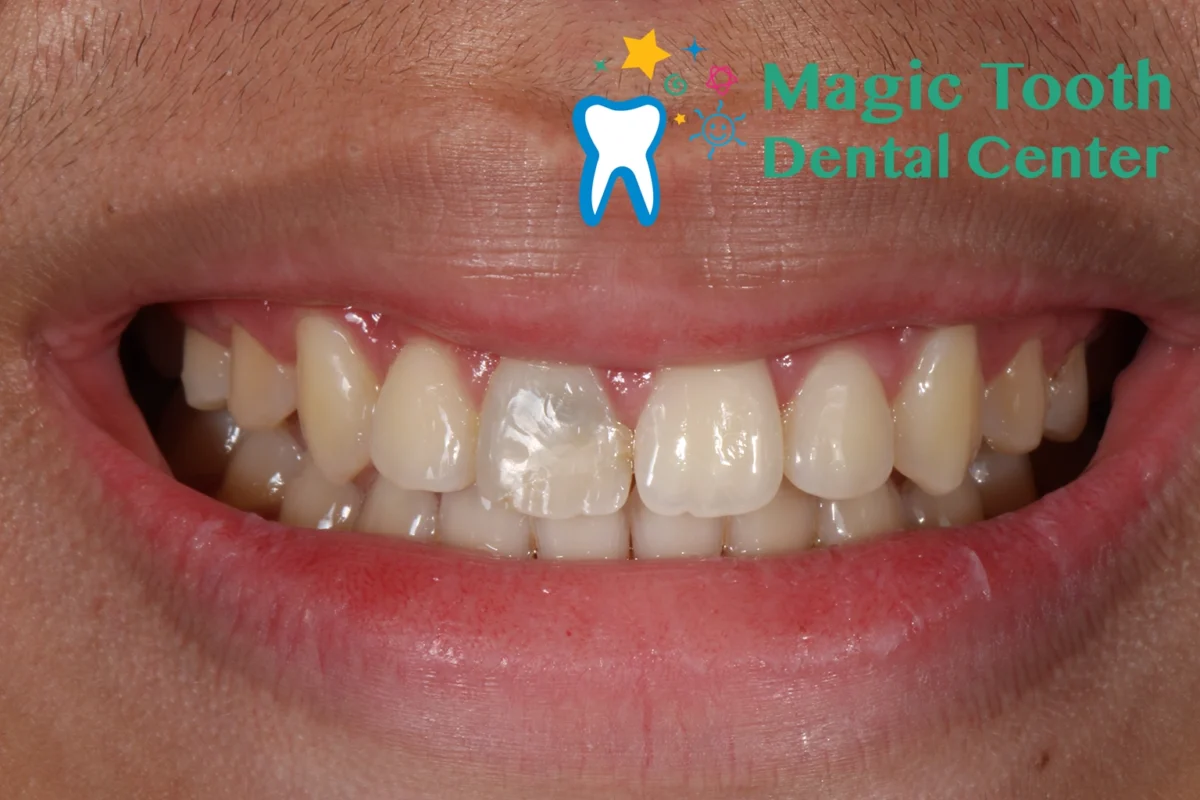
Before & after · Ceramic crown on a front tooth
A darkened front tooth, matched to its neighbor
An upper central incisor that had darkened after an old injury, with patchy discoloration, restored with a lifelike ceramic crown. The ceramic recreates the natural translucency of enamel and a shade matched to the neighboring central incisor, so the two front teeth look like a natural pair.
 Before
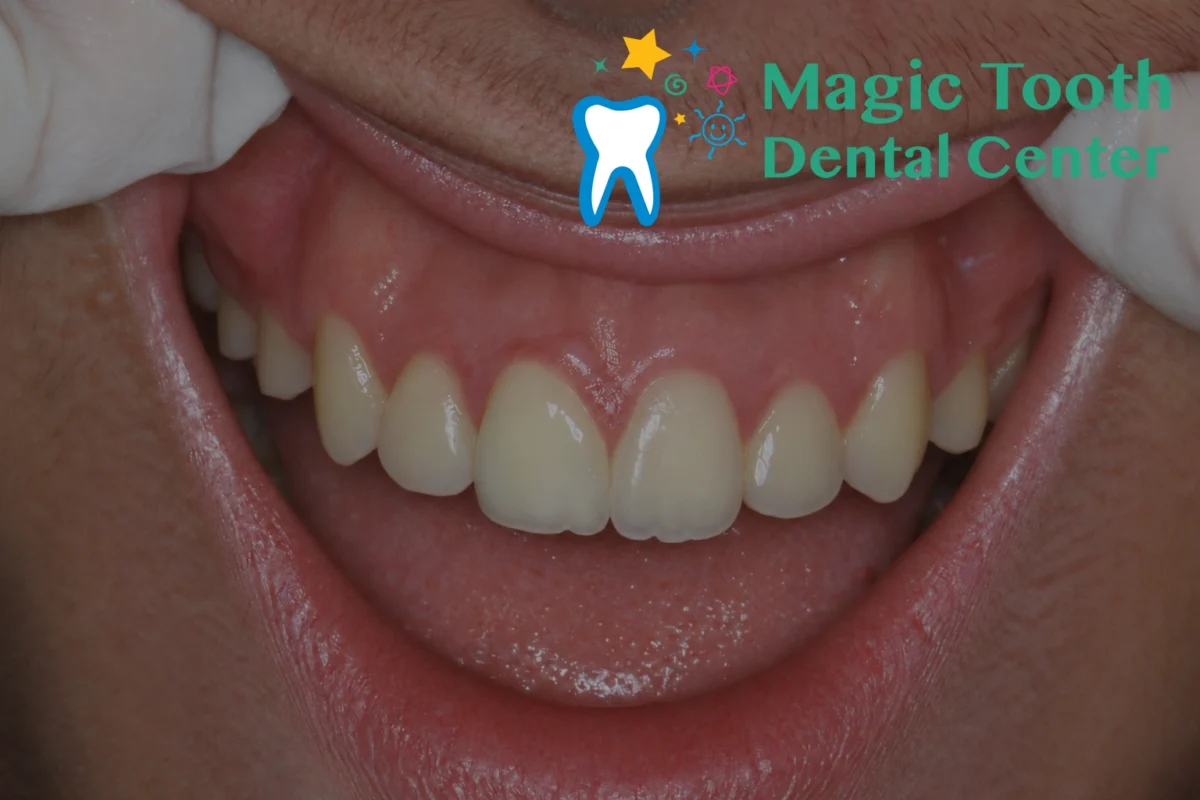 After
Before & after · Veneers & crowns · Digital smile design
A new smile, designed on screen and tried on first
Worn, chipped upper teeth with uneven lengths and mismatched shades, restored with ceramic veneers and crowns. We planned the new smile on the computer with CAD/CAM digital smile design and a digital wax-up, and the patient then tried it in his mouth as a 3D-printed temporary mock-up. Only after he approved the look did we make the final veneers and crowns to the same design.
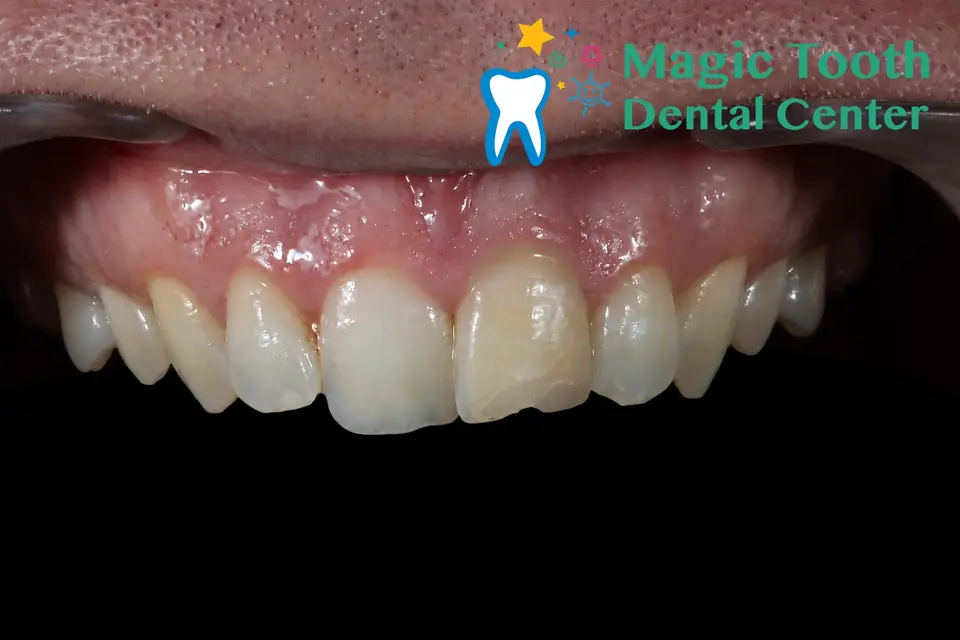 1Before
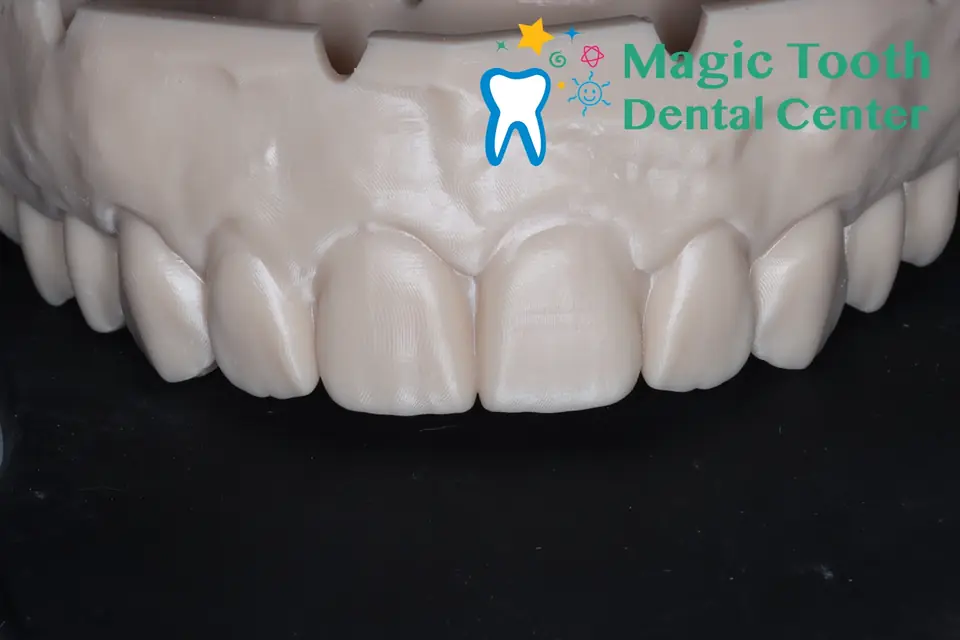 2Digital wax-up
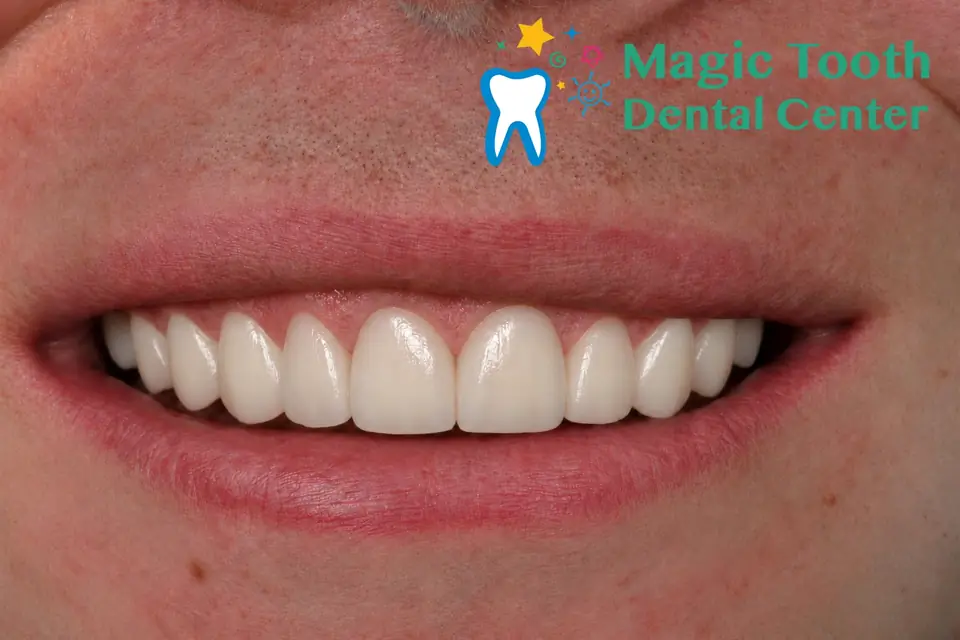 3Mock-up trial
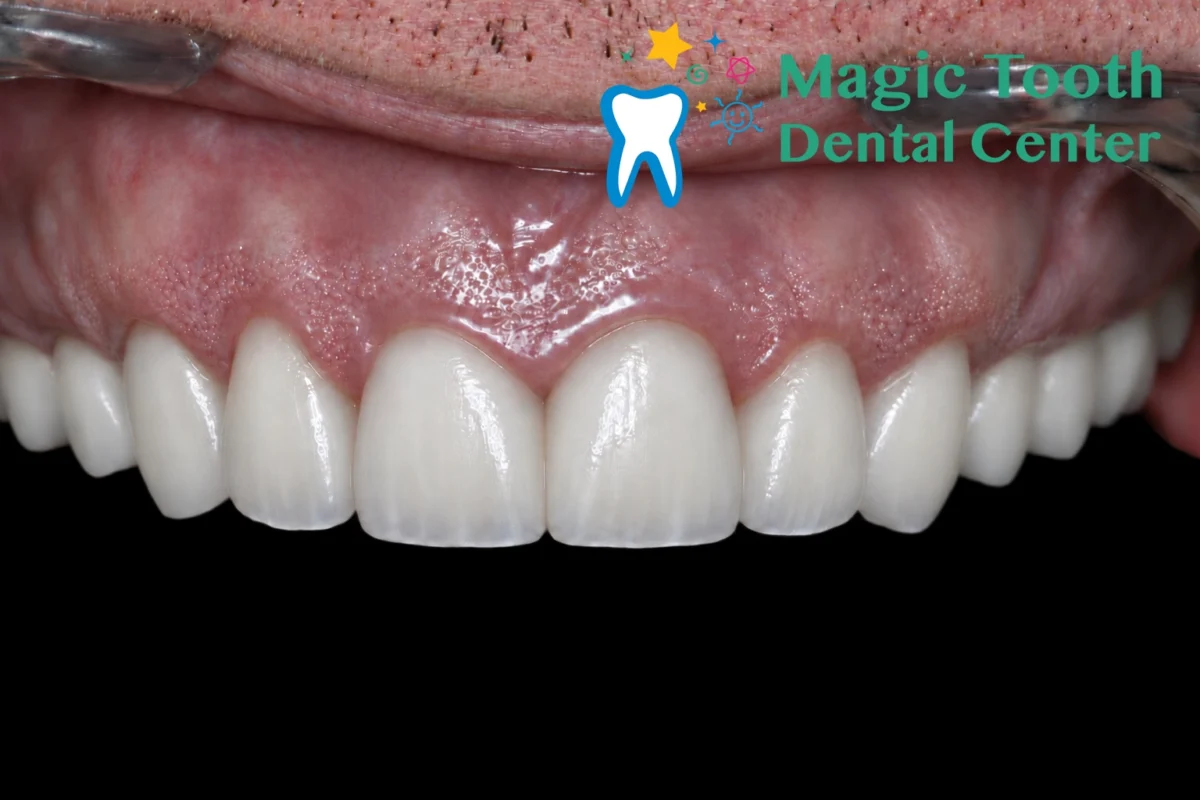 4After
- Digital smile design
Photos and digital scans of the teeth let us design the new smile on the computer (CAD/CAM) before anything is made.
- Digital wax-up
Then the new tooth shapes are modeled as a digital wax-up and 3D-printed (photo 2).
- Mock-up trial
A printed mock-up is worn over the teeth as a temporary, so the patient can see and feel the new smile and approve it (photo 3).
- Final veneers & crowns
Finally, once approved, the final ceramic veneers and crowns are made to the same design (photo 4).
Ceramic crowns & veneers · Amman
Teeth that look and feel natural. German ceramic, digital precision.
In short, ceramic crowns and veneers are custom-made covers that repair broken, worn or discolored teeth. At Magic Tooth we make them from high-quality German ceramic, designed on a computer and precision-milled, so they fit closely, stay strong and look like your own teeth. All-ceramic crowns look more like natural enamel than any other crown type, and today’s strong ceramics last as well as traditional metal-ceramic crowns. [1][2]
- 100% metal-free
- Digitally designed & milled
- Shade-matched to your smile
- Strong enough for back teeth
For adults and older teens · Your dentist recommends the right ceramic and design for each tooth
How light behaves
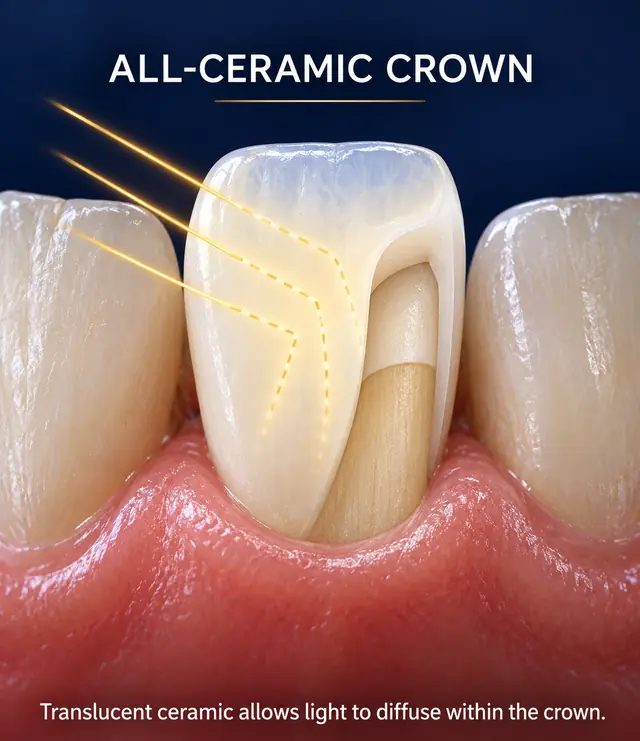
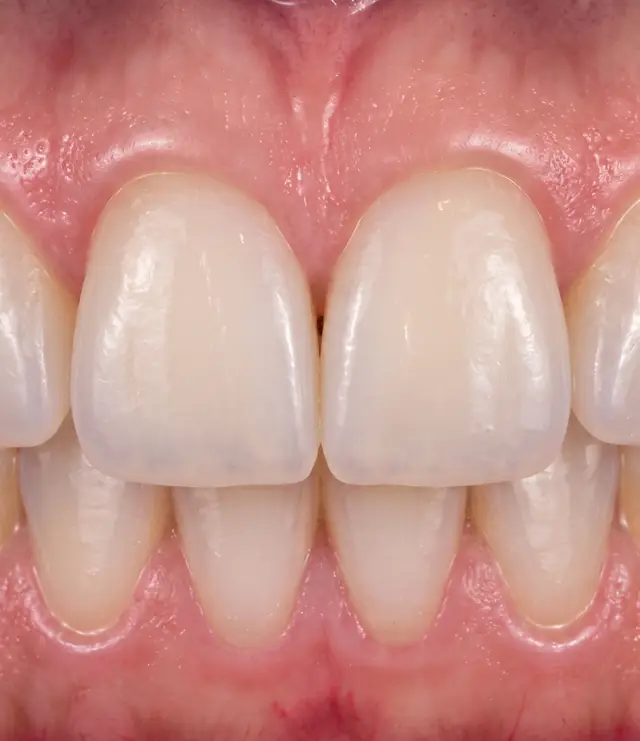
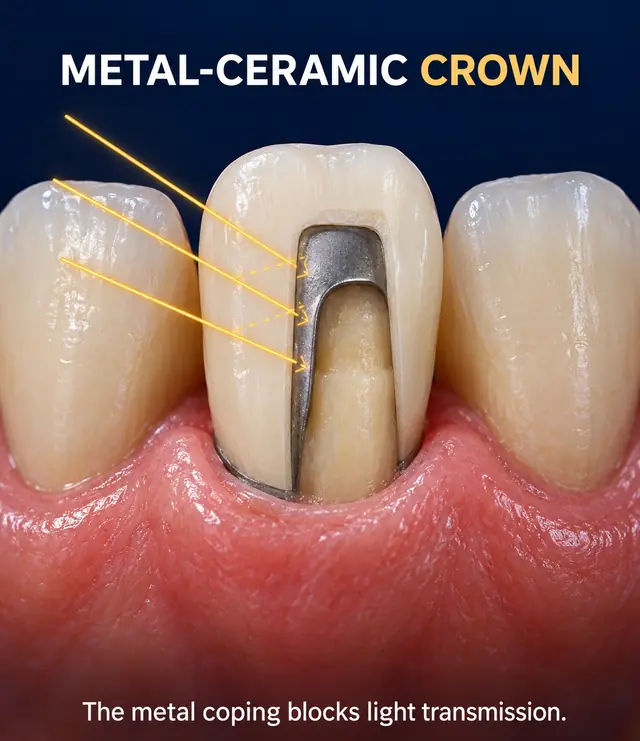
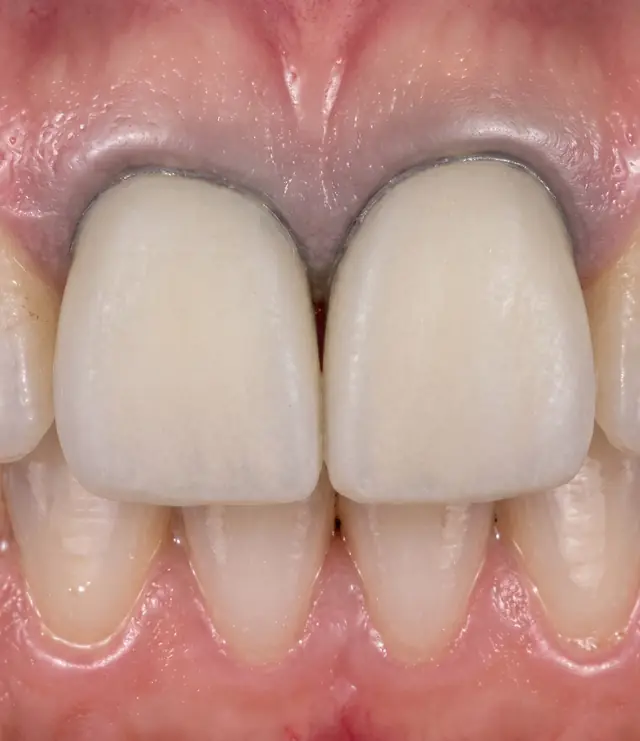
Light passes into ceramic much as it does into natural enamel, so the tooth glows naturally and the gum line stays pink.A metal core blocks light. As a result, the tooth can look flatter, and a gray edge may show at the gum line.[3]
The basics
Ceramic crowns vs veneers: what’s the difference?
Both crowns and veneers are made from the same beautiful ceramic. The difference is how much of the tooth they cover, and that depends on how much healthy tooth you still have.
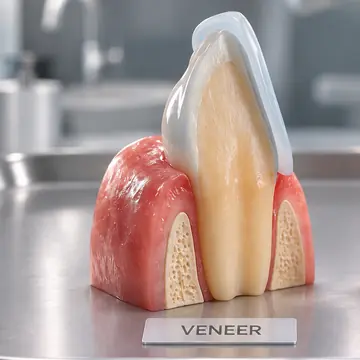
Ceramic veneers
A thin ceramic shell bonded to the front surface of a tooth, rather than around it. Think of it as a contact lens for your tooth: it changes how the tooth looks while keeping most of it.[4]
- Chips, worn edges and uneven shapes
- Stains that whitening cannot remove
- Small gaps between front teeth
Preparing a tooth for a veneer usually removes about 3–30% of the visible tooth, compared with about 63–72% for a full crown.[5]
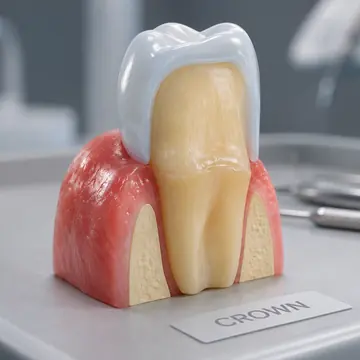
Ceramic crowns
A full cover that surrounds the whole visible tooth, so it acts like a protective helmet. It holds a weakened tooth together and also restores its shape, strength and color.[1]
- Large fillings, cracks or broken teeth
- Back teeth after root canal treatment
- Covering a dental implant or forming a bridge

Our approach: we always choose the most conservative option that will last. Sometimes that is a veneer, sometimes a crown, and sometimes a simple tooth-colored filling or teeth whitening is all you need.
From our clinic
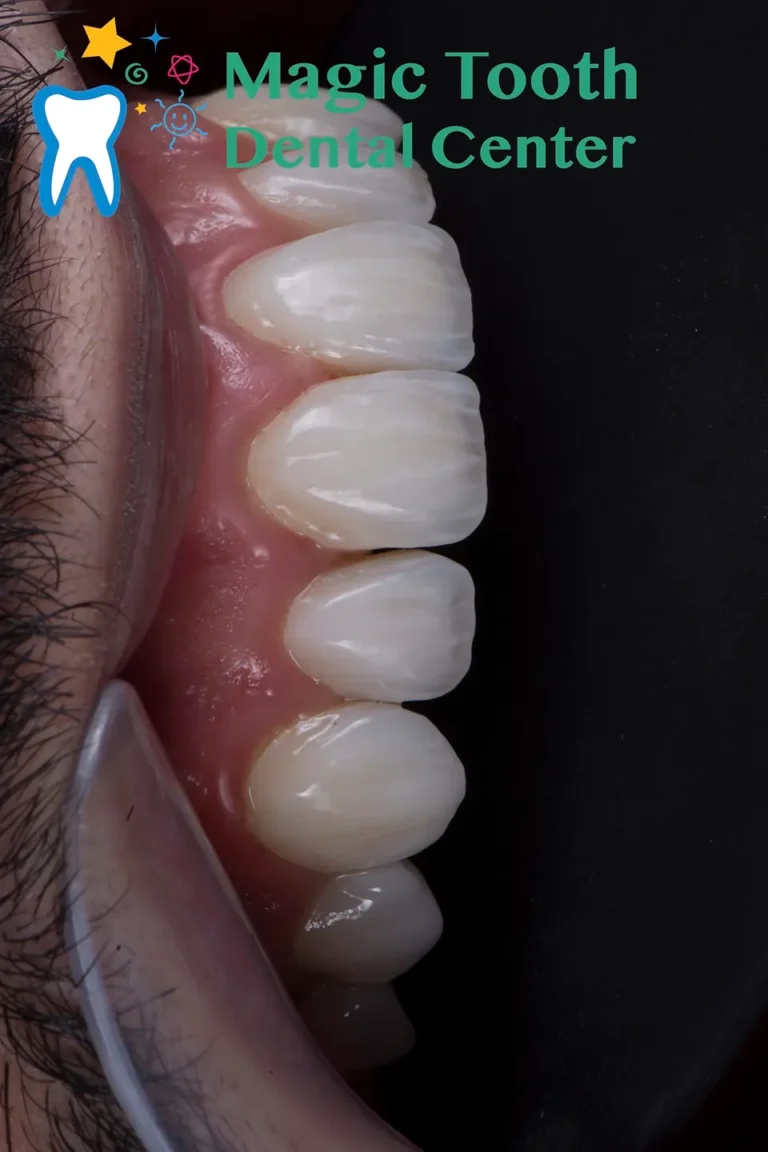
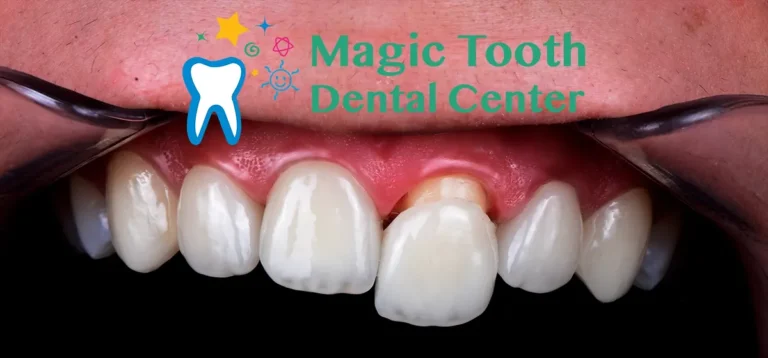
Ceramic veneers and crowns made for our patients at Magic Tooth.
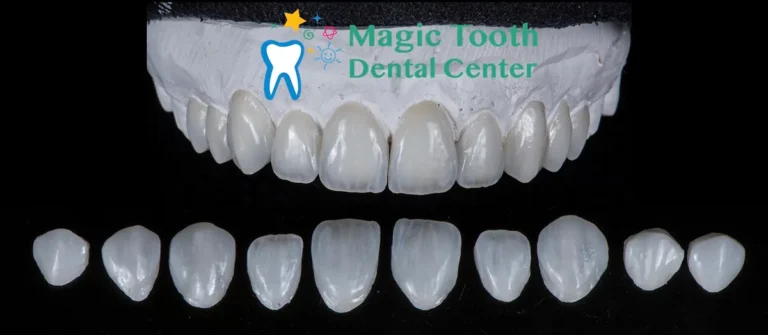
The material matters
Why German ceramic for crowns and veneers?
German dental manufacturers are known for precision engineering as well as strict quality control. The ceramic we use is made in Germany and arrives as a solid, factory-made block, so it is ready to be shaped into your new tooth.

The same quality every time
Each block is made under controlled factory conditions, so its strength and color are consistent. As a result, milling your tooth from one solid piece gives a reliable, predictable result.[6]

Tested to an international standard
Dental ceramics are tested against ISO 6872, the international standard for ceramics used in crowns, bridges and veneers.[7]

Natural color built in
Modern ceramics can also have gradual color layers: warmer near the gum and more see-through at the biting edge, just like a real tooth.[3]

Gentle on your body
In addition, ceramic is stable and well tolerated by the body, with no metal to corrode or show through.[3]
Curious about the exact material? Ask us, too, which ceramic is planned for each tooth, and why.
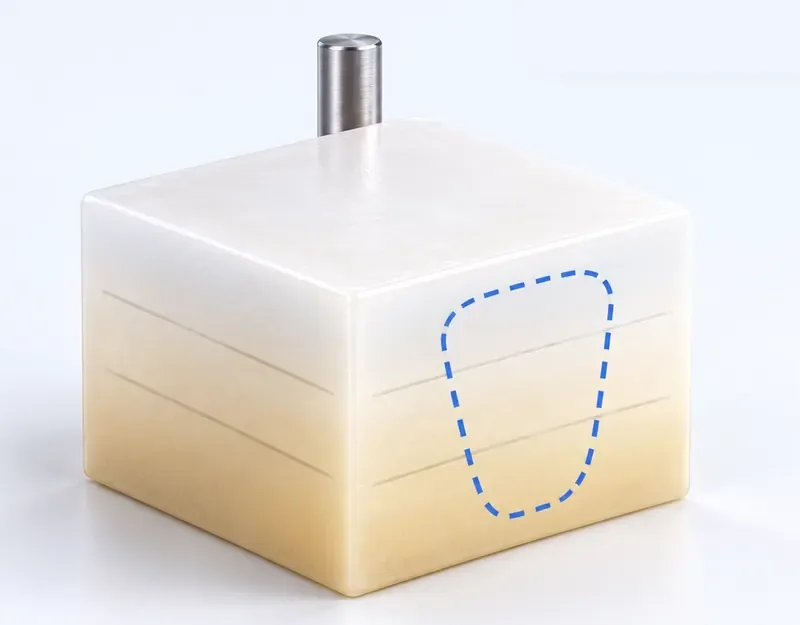
- Biting edgeMore translucent, like enamel
- BodyYour matched tooth shade
- Gum sideWarmer, like natural dentin
Advantages
Six reasons patients choose ceramic crowns and veneers
In short, ceramic combines the look of a natural tooth with the strength you need to bite and chew with confidence.

Life-like beauty
Ceramic lets light in and reflects it back much like enamel, so it has depth and a natural glow instead of a flat look. In a five-year study of implant crowns, all-ceramic crowns scored better for color and shape than metal-ceramic ones.[1][8]

Strong and long-lasting
Single-piece ceramic crowns reached 96.8–98.5% survival at five years, on par with metal-ceramic crowns (97.1%), and they chip less than layered designs.[2]
Precise, comfortable fit
Computer design and machine milling produce crowns whose fit is measured in microns (thousandths of a millimeter), and therefore within what dentists consider clinically acceptable. Also, a close fit means a smooth edge that feels natural to your tongue.[9][10]

Metal-free and gum-friendly
No dark metal edge at the gum line, and nothing to show through if gums recede with age. It is also a good choice for people who are sensitive to metals.[1][3]

five-year survival of single-piece glass-ceramic (lithium disilicate) crowns, in a 2026 review of 64 clinical studies[2]
of glass-ceramic (lithium disilicate) veneers still in place after about 10 years, in a review of 29 clinical studies[11]
less tooth removed for a front-surface veneer than for a metal-ceramic crown on the same tooth[5]
Figures come from published research, not from our own clinic; individual results depend on your teeth, bite and home care.
Which one is right for me?
Crowns or veneers? Try the smile finder
First, choose the teeth and the situation that sound like yours. You will then see what is often recommended, which ceramic suits it, and a ready WhatsApp message to send us. However, it is only a general guide: the right answer comes from an examination.
Choose the teeth and the situation
Your suggestion will appear here.
 Which ceramic?
 What we check first
Your choices are also added to the message. Nothing is sent until you press send in WhatsApp.
Our technology, simply explained
From scan to smile: how ceramic crowns and veneers are made
In short, digital dentistry replaces guesswork with measurements. Tap each step to see what happens and what it means for you.
 Step 1 of 6 · Planning
Smile & shade planning
First, we listen: what bothers you about your teeth, and what you would like to change. Then we check your teeth, gums and bite, take photographs and match the shade in good light.
Any gum disease or decay is treated first, so your new teeth sit on a healthy foundation.[4]
 Thinking of whitening? Do it before your crowns or veneers are made. Ceramic keeps its color, so we match it to your final, brighter shade. Read our whitening guide
 Step 2 of 6 · Digital model
A 3D digital scan of your teeth
Once the teeth are gently prepared, a small camera wand then scans them to build an accurate 3D model on the computer. In some cases a traditional impression suits better, and it is then scanned too.
Most patients find scanning more comfortable than impression trays, with less gagging, no unpleasant taste and easier breathing. For example, in one trial 80% of patients preferred the scan. Crowns made from scans fit as well as, or slightly better than, those made from traditional impressions.[13][14][10]
 Step 3 of 6 · Design
Computer design (CAD)
On screen, each crown or veneer is designed tooth by tooth: its shape, length and thickness, how it touches its neighbors, and how it meets the opposite teeth when you bite.
Because the design is digital, it can be fine-tuned precisely before any ceramic is cut.
 Step 4 of 6 · Manufacture
Precision milling (CAM)
A computer-controlled milling machine carves your restoration from a solid block of German ceramic, following the digital design with micron-level accuracy. Unlike porcelain layered by hand, it comes from one uniform, factory-made piece.[6]
In fact, studies of digitally made ceramic crowns report a clinically acceptable fit at the edges and inside the crown.[9]
 Step 5 of 6 · Finishing
Firing & finishing
Then, depending on the material, the milled ceramic is fired in a special furnace to reach its full strength. A skilled dental technician then adds subtle color details and a glaze, so your tooth has the small natural touches that make it look alive, not artificial.
 Step 6 of 6 · Fitting
Try-in & bonding
We try the restoration in first, so you can see it in your smile. Once the color, fit and bite are right, it is bonded firmly to your tooth and polished, and we check your bite again so chewing feels natural.
 A digital record of your smile. Because your restoration was designed digitally, the design can be kept on file, which can make a future replacement simpler.
Exact steps vary from case to case, and some take place in a dental laboratory rather than in the clinic. Most treatments need at least two visits, with temporary teeth in between; your dentist will give you a clear timeline.[1]
Side by side
How ceramic compares with other crowns
Every crown type has its place, so here is how our German ceramic compares with the most common alternatives.
| Feature | German ceramicGlass-ceramic or zirconia | Metal-ceramicPorcelain fused to metal | Full metalGold or metal alloy | ResinPlastic-based material |
|---|---|---|---|---|
| Natural look | Most life-like; closest to enamel[1] | Tooth-colored but more opaque | Gold or silver color | Tooth-colored; can dull over time |
| Light through the tooth | Yes, like a real tooth | Blocked by the metal core[3] | None | Some |
| At the gum line | Natural; no dark edge | A gray edge may show, especially if gums recede[3] | Metal edge visible | No metal edge |
| Metal-free | Yes | No | No | Yes |
Strength and lifespan
| Feature | German ceramicGlass-ceramic or zirconia | Metal-ceramicPorcelain fused to metal | Full metalGold or metal alloy | ResinPlastic-based material |
|---|---|---|---|---|
| Strength | High; zirconia is the strongest ceramic[1] | High; the outer porcelain can chip and expose metal[1] | Very high and durable[1] | Lower; more likely to break[1] |
| Five-year survival (research) | 96.8–98.5% for single-piece ceramic crowns[2] | 97.1%[2] | Long track record | Mostly used short-term |
| Best suited for | Front and back teeth, veneers, implant crowns | Cases where a metal frame is preferred | Back teeth that do not show[1] | Temporary crowns or short-term repairs[1] |
Metal-ceramic and metal crowns still remain reliable options, and your dentist may recommend them in some situations. Overall, the biggest differences are appearance and metal content. Use the buttons above the table to switch between crown types.
Myth or fact?
Four things patients often ask about ceramic crowns and veneers
Tap a card to see the answer, then tap again.
Honest expectations
Before you decide, and after you smile
Great results come from good planning as well as good care. Here is what we want every patient to know.
Good to know before you start
Ceramic crowns and veneers are a long-term commitment, so take time to ask questions.
 A permanent choice. Some enamel is reshaped, so the tooth will always need a covering.[4]
 Whiten first. Ceramic does not change color with whitening, so we match it to your final shade.
 Grind or clench at night? In a 20-year veneer study, grinding made failure much more likely, so a custom night guard protects both your ceramic and your natural teeth.[15]
- A healthy foundation. Placing veneers over unhealthy teeth can make problems worse, so gum disease and decay are treated first.[4]
- Rarely, ceramic can still chip. In veneer studies, chipping or fracture affected about 4% of cases; however, small chips can often be polished or repaired.[12]
 Mild sensitivity is normal at first. Also, some sensitivity to hot and cold for a few days or weeks usually settles on its own.[1]
Frequently asked questions
Ceramic crowns and veneers: your questions answered
Choose a topic, then tap a question to open the answer.
Will people be able to tell I have crowns or veneers?
Will my teeth look too white or fake?
Only if you want a very bright shade. We choose the shade and shape together with you, and you see the result at the try-in before anything is bonded. In fact, a natural result usually has small variations in color and translucency, just like real teeth.
Are veneers the same as “lenses” or a “Hollywood smile”?
In fact, “lenses” is a popular name for veneers. A “Hollywood smile” usually means veneers or crowns on many front teeth in a bright shade. We help you choose a result that suits your face and also keeps your teeth healthy. See how we plan a Hollywood smile.
Also, be careful with offers that promise “no preparation” for everyone: most porcelain veneers need some enamel shaping, and only an examination can show what is right for you.[4]
Does getting a crown or veneer hurt?
Tooth preparation is done under local anesthetic, so you should feel pressure but not pain. Some sensitivity to hot and cold for a few days or weeks is normal as well, and it usually settles on its own. If you feel nervous, tell us; we will go at your pace.[1]
How many visits will I need?
Usually at least two: one to plan, prepare the teeth and take the 3D scan, and one to fit the final crowns or veneers. Meanwhile, you may wear temporary teeth. A full smile makeover can need extra planning visits, and we give you a clear timeline before you start.[1]
How much of my natural tooth will be removed?
In short, it depends on the restoration. For example, in a laboratory study, preparing a tooth for a veneer removed about 3–30% of the visible tooth, compared with about 63–72% for full crowns. Because ceramic can be bonded firmly, we can often choose more conservative designs that keep as much healthy tooth as possible.[5][6]
How much do ceramic crowns and veneers cost?
The cost depends on how many teeth are treated as well as which ceramic is right for each one. After your examination we give you a clear, written estimate before any treatment starts. We accept cash and also credit cards, in Jordanian dinars or US dollars.
How long do ceramic crowns and veneers last?
Research reviews show 96.8–98.5% of modern single-piece ceramic crowns still in service after five years, and about 97% of glass-ceramic veneers after about ten years.[2][11]
Many last much longer. Above all, healthy gums, good home care, regular check-ups and protecting your teeth from grinding make the biggest difference.
Can I whiten my crowns or veneers later?
No. Ceramic keeps its color, so it does not respond to whitening. If you would like a brighter smile, whiten your natural teeth first; we then match your new ceramic to that shade. Read our teeth whitening guide.
What if a crown or veneer chips?
It is uncommon: for example, in veneer studies chipping or fracture affected about 4% of cases. Small chips can often be polished or repaired, whereas a larger break means the crown or veneer is remade. Call us early, and keep the piece if it comes off.[12]
Is ceramic strong enough for my back teeth?
Yes. Both single-piece glass-ceramic and zirconia crowns are widely used on back teeth. In a 2026 review they performed as well as metal-ceramic crowns over five years and chipped less often than crowns with a layered porcelain surface. For example, zirconia is usually chosen where biting forces are highest.[2][1]
Why choose ceramic over a metal-ceramic crown?
I am sensitive to some metals. Is ceramic suitable?
Ceramic crowns and veneers contain no metal, so they are a good option for people with metal sensitivities. Please tell us about any allergies at your consultation so we can plan every material used in your treatment.[1]
Which German ceramic will you use for my tooth?
We use high-quality German ceramic, chosen for each tooth: glass-ceramic where looks matter most, while zirconia is used where strength matters most. At your consultation, we also tell you which material is planned and why.
Are veneers suitable for teenagers?
We usually wait until the teeth and gums have finished developing, often in the late teens, before placing ceramic veneers. Until then, gentler options such as tooth-colored bonding can repair chips and stains.
Your smile, your decision
Find out if ceramic crowns or veneers are right for you
At a consultation we examine your teeth, listen to what you would like to change, explain every option, including the more conservative ones, and give you a clear plan and cost before anything begins.
Curious how veneers would look on you? Try our free online smile design on your own photo.
 Visit usBuilding 192, first floor, Princess Basmah Street, Abdoun, Amman
 Opening hoursSaturday to Wednesday, 9 am to 7 pm · Thursday, 9 am to 2 pm · Friday closed
Good questions to ask your dentist
 “Is a veneer, a crown or a simpler option best for my tooth?”
- “Which ceramic will you use for each tooth, and why?”
- “How much of my tooth needs to be prepared?”
- “What can I do to make my new teeth last as long as possible?”
References & further reading
Cleveland Clinic: Dental Crowns
Patient guide to crown types (all-ceramic, zirconia, metal-ceramic, metal, resin), visits and care.Pjetursson BE, et al. Survival, failure and complication rates of metal-ceramic, veneered and monolithic all-ceramic tooth-supported single crowns: systematic review and meta-analysis, Part 1. Int J Prosthodont, 2026
Five-year survival by crown material, from 64 clinical studies. DOI: 10.11607/ijp.9633Pereira RM, et al. An engineering perspective of ceramics applied in dental reconstructions. J Appl Oral Sci, 2023
Strength, biocompatibility, stability and appearance of dental ceramics compared with metal-ceramics. DOI: 10.1590/1678-7757-2022-0421American Dental Association (MouthHealthy): Veneers
What veneers are, why treatment is not reversible, and why teeth must be healthy first.Edelhoff D, Sorensen JA. Tooth structure removal associated with various preparation designs for anterior teeth. J Prosthet Dent, 2002
How much tooth is removed for veneers compared with crowns. DOI: 10.1067/mpr.2002.124094Spitznagel FA, Boldt J, Gierthmuehlen PC. CAD/CAM ceramic restorative materials for natural teeth. J Dent Res, 2018
Digitally milled ceramics: standardized manufacturing and minimally invasive treatment. DOI: 10.1177/0022034518779759International Organization for Standardization: ISO 6872:2024, Dentistry — Ceramic materials
Requirements and test methods for dental ceramics used in crowns, bridges and veneers.Hosseini M, Worsaae N, Gotfredsen K. Survival rate of implant-supported single-tooth restorations based on zirconia or metal abutment: a 5-year prospective clinical study. J Evid Based Dent Pract, 2024
All-ceramic crowns rated better for color and shape than metal-ceramic crowns. DOI: 10.1016/j.jebdp.2024.101970Turkyilmaz I, Benli M, Yun S. Marginal and internal fit of lithium disilicate and zirconia all-ceramic CAD-CAM crowns using digital impressions: a systematic review. Prim Dent J, 2023
Fit of digitally made ceramic crowns, measured in microns. DOI: 10.1177/20501684231154323Alqahtani WMS, et al. Marginal fit of all-ceramic fixed restorations through digital and traditional impressions: systematic review and meta-analysis. Eur J Dent, 2025
Restorations from digital scans fitted slightly better at the edges. DOI: 10.1055/s-0045-1804528Klein P, et al. Survival and complication rates of feldspathic, leucite-reinforced, lithium disilicate and zirconia ceramic laminate veneers: systematic review and meta-analysis. J Esthet Restor Dent, 2025
About 97% survival of lithium disilicate veneers after about 10 years, from 29 studies. DOI: 10.1111/jerd.13351Morimoto S, et al. Main clinical outcomes of feldspathic porcelain and glass-ceramic laminate veneers: systematic review and meta-analysis. Int J Prosthodont, 2016
Chipping or fracture in about 4% of veneers; the most common complication. DOI: 10.11607/ijp.4315de Paris Matos T, et al. Patient-related outcomes of conventional impression making versus intraoral scanning: systematic review and meta-analysis. J Prosthet Dent, 2023
Patients preferred scanning, with less discomfort, nausea and unpleasant taste. DOI: 10.1016/j.prosdent.2021.08.022Seth C, Bawa A, Gotfredsen K. Digital versus conventional prosthetic workflow for implant-supported single crowns: a randomized crossover study. J Prosthet Dent, 2024
80% of patients preferred digital scanning, with the same crown quality. DOI: 10.1016/j.prosdent.2023.03.031Beier US, et al. Clinical performance of porcelain laminate veneers for up to 20 years. Int J Prosthodont, 2012
93.5% of veneers survived 10 years; grinding greatly raised the risk of failure.
Sources checked: 27 October 2026. Links open in a new tab, while the sources themselves are in English. Research articles are listed via PubMed. However, research figures describe groups of patients and are not a guarantee for any individual case.
